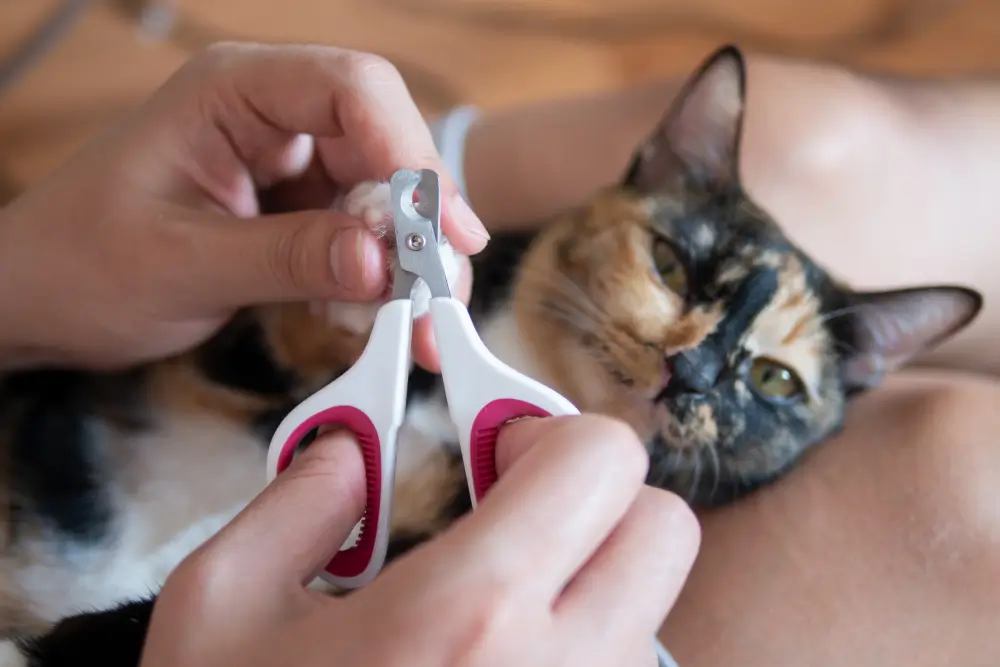
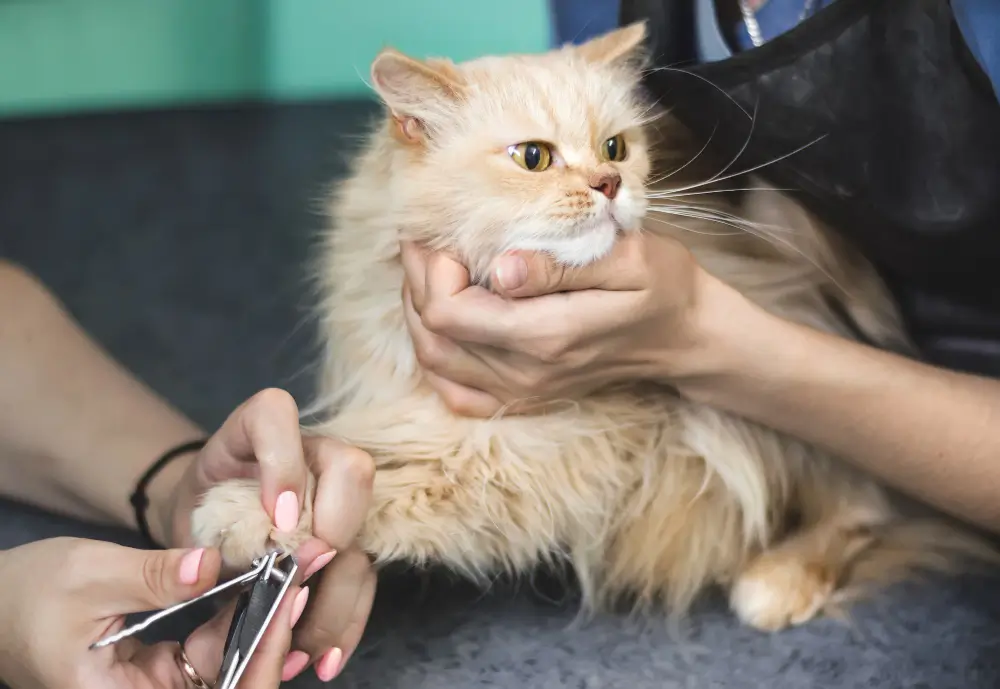
Let’s be honest trimming your cat’s nails can feel like preparing for battle. One minute you are confidently approaching with clippers in hand, the next you are nursing scratches while your cat glares at you from under the couch. But here is the truth: learning how to trim cat nails properly does not have to be a nightmare for you or your feline friend.
Whether you are a first-time cat parent or you have been avoiding this grooming task for way too long, this guide will walk you through everything you need to know. From choosing the right tools to mastering the technique, you will discover how to make nail trimming a calm, routine part of your cat care regimen.
Why Trimming Your Cat’s Nails Matters
Before we dive into the how-to, let’s talk about why this matters. Regular nail maintenance is n0t just about protecting your furniture (though that is definitely a bonus). Overgrown nails can:
- Curl and grow into your cat’s paw pads, causing pain and infection
- Get caught in carpets, blankets, or Sustainable Cat Toys, leading to injury
- Make walking uncomfortable or affect your cat’s gait
- Increase the risk of scratching injuries during play
- Cause splitting or breaking, which can be painful
Indoor cats especially need regular trims since they don’t naturally wear down their claws like outdoor cats do on rough surfaces.
How Often to Trim Cat Nails
This is one of the most common questions cat owners ask, and the answer varies depending on your cat’s lifestyle and activity level.
General guidelines:
- Indoor cats: Every 2-4 weeks
- Active cats with scratching posts: Every 3-4 weeks
- Senior or less active cats: Every 2-3 weeks
- Outdoor cats: Every 4-6 weeks (they naturally wear claws down)
Check your cat’s nails weekly. If you can hear clicking when they walk on hard floors, it is time for a trim. Don’t wait until the nails are visibly curving stay ahead of the growth.
Essential Tools You will Need
Having the right equipment makes all the difference when learning how to trim a cat’s nails. Here is what to gather:
Nail clippers:
- Scissor-style clippers (best for most cats)
- Guillotine-style clippers (good for small to medium nails)
- Human nail clippers (work in a pinch for kittens)
Optional but helpful:
- Styptic powder or cornstarch (stops bleeding if you cut too short)
- Treats for positive reinforcement
- A towel for gentle restraint if needed
- Good lighting or a flashlight
Pro tip: Avoid dull clippers they crush rather than cut, making the experience painful for your cat.
Step-by-Step: How to Trim a Cat’s Nails
Step 1: Choose the Right Time
Timing is everything. Pick a moment when your cat is naturally relaxed after a meal, following a play session with their favorite Sustainable Cat Toys, or during their afternoon nap. Never attempt nail trimming when your cat is energetic or agitated.
Step 2: Create a Calm Environment
Find a quiet space with good lighting. Sit comfortably with your cat on your lap or a table. Some cats do better wrapped gently in a towel with just one paw exposed at a time (the “purrito” method).
Step 3: Get Your Cat Comfortable with Paw Handling
If this is your first time, spend a few days just touching and massaging your cat’s paws during calm moments. Press gently on the paw pad to extend the claws. Reward with treats and praise. This desensitization makes the actual trimming much easier.
Step 4: Identify the Quick
Hold your cat’s paw gently and press the pad to expose the nail. Look closely you will see a pink area inside the nail called the quick. This contains blood vessels and nerves. Never cut the quick.
For cats with clear or white nails, the quick is visible as a pink line. For dark nails, you will need to be more conservative and trim only the sharp, curved tip.
Step 5: Make the Cut
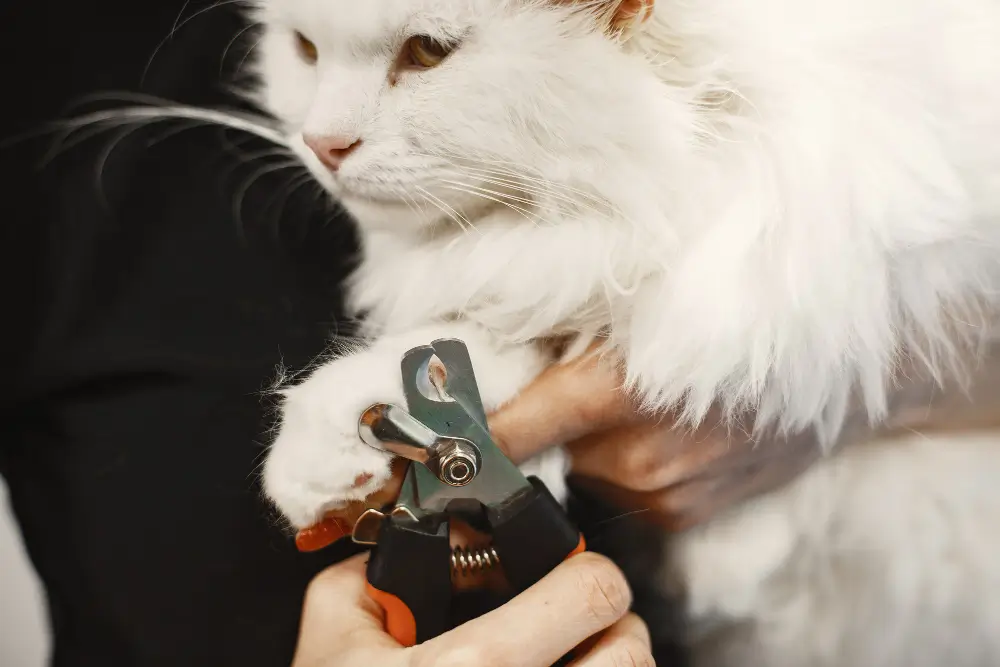
Position the clippers perpendicular to the nail (not parallel) about 2mm away from the quick. Squeeze firmly and quickly one clean cut is better than hesitant nibbling.
Key points:
- Cut only the sharp, hooked tip
- Trim at a slight angle following the natural curve
- If you see pink, stop immediately you are too close to the quick
- Work quickly but calmly
Step 6: Trim All Four Paws
Work through each paw systematically. You don’t have to do all 18-20 nails in one session (cats have 5 on front paws, 4 on back). If your cat gets stressed, take a break and finish later. Some cats tolerate one or two paws per session better.
Don’t forget the dewclaws! These are the small claws on the inner side of the front legs. They don’t touch the ground and can grow into circles if neglected.
Step 7: Reward Generously
Immediately after trimming (or even after each paw), give your cat treats, affection, and praise. This positive association makes future sessions easier.
What to Do If You Cut the Quick
Accidents happen, even to experienced cat owners. If you accidentally clip the quick:
- Stay calm your cat will sense your anxiety
- Apply styptic powder or cornstarch to the nail
- Apply gentle pressure for 30 seconds to stop bleeding
- Give your cat space and extra treats
- The nail should stop bleeding within 5 minutes
If bleeding does not stop after 10-15 minutes, contact your veterinarian.
Tips for Cats Who Hate Nail Trimming
Some cats really resist nail trimming, and that is okay. Try these strategies:
Gradual desensitization:
- Week 1: Just touch the clippers to their paws
- Week 2: Trim one nail, give treats
- Week 3: Trim a few more nails
- Week 4: Complete full session
Strategic distraction: Have someone else offer treats, use a lick mat with wet food, or let them focus on a toy while you trim.
Post-bath trimming: Nails are softer after a bath (though most cats are not fans of baths either).
Consider professional help: Your vet or a professional groomer can trim nails if your cat is truly unmanageable. There is no shame in asking for help it is better than causing stress or injury.
Alternatives and Supplements to Nail Trimming
While trimming is important, you can extend time between sessions with:
- Quality scratching posts: Multiple posts in different areas encourage natural nail maintenance
- Scratching pads: Horizontal cardboard scratchers are favorites for many cats
- Nail caps: Soft plastic caps that glue over claws (lasts 4-6 weeks)
- Regular play: Active cats naturally wear down their nails more quickly
And just like you might look into Natural Flea Treatments for Cats or ways to Deworm My Cat Naturally, maintaining healthy nails is part of holistic cat wellness.
Common Mistakes to Avoid
When learning how to trim cat nails, watch out for these errors:
Waiting too long between trims (makes nails harder to cut)
Using dull clippers (causes splitting and discomfort)
Forcing a struggling cat (creates negative associations)
Cutting parallel to the nail (increased risk of splitting)
Trimming too much at once (better to do less frequently than risk the quick)